
Choose a subject
What to color when you have no ideas
You can want to color and still feel stuck between too many pages. Make the decision smaller: choose one familiar subject, prepare four colors and start with the clearest shape.
Quick answer
When you have no coloring ideas, pick a small subject you already understand: a mug, flower, book stack, rainy window, mushroom, leaf or cute animal. Limit yourself to four colors and begin with one easy area.
Do not search for the page you will want to finish perfectly. Choose the page that gives you an obvious first move. If you need more options, browse the cozy coloring inspiration hub.
Use three questions to choose a page quickly
- Can I see one simple area to start? Look for a mug, wall, animal body, blanket or large leaf.
- Can this page work with four to six colors? You can add details later, but the first palette should feel manageable.
- Do I like the subject today? Choose between home, food, animals, flowers, weather or a seasonal scene.
If two answers are yes, the page is a good enough choice. Put the other books away for the session so you do not restart the decision.
Three visual starting points
Use the picture only to borrow one idea: the rainy colors, the repeated pastels or the warm food palette. Your page does not need to match the example.
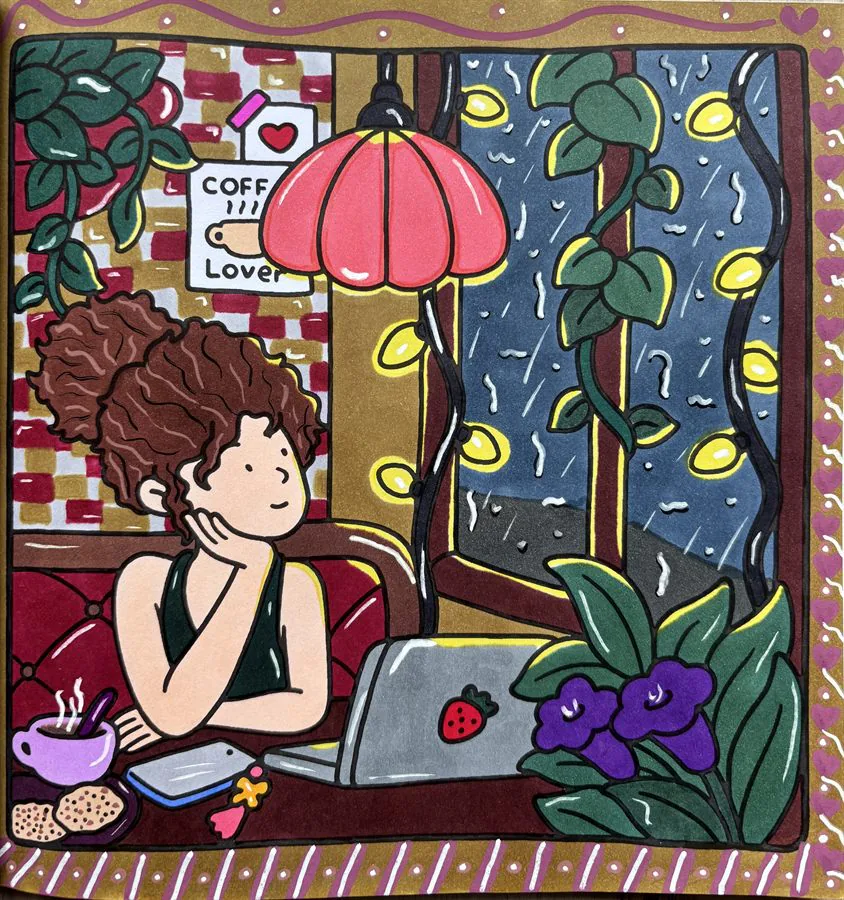
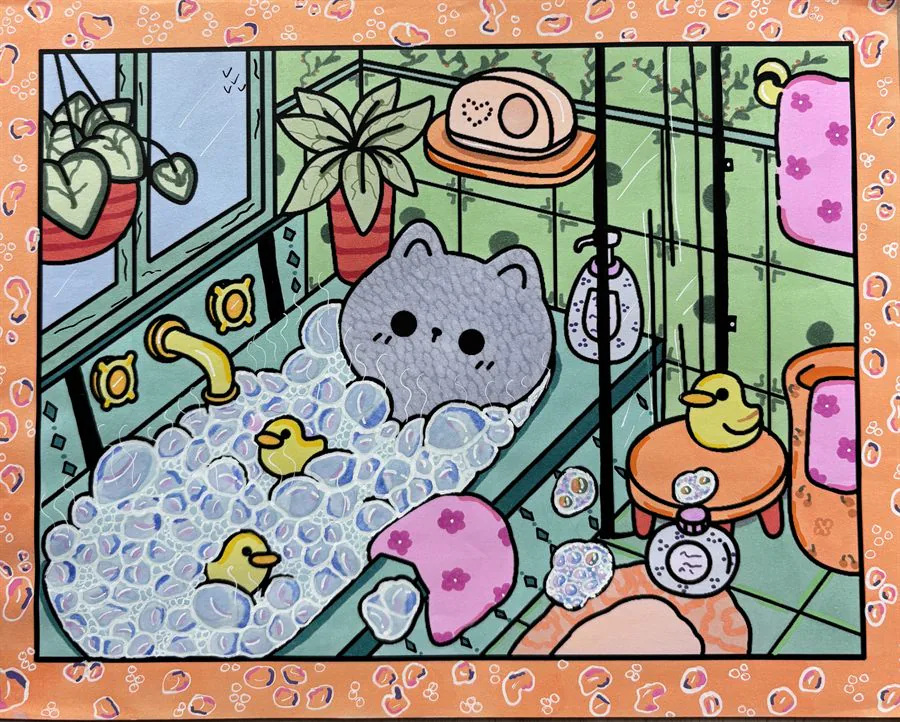
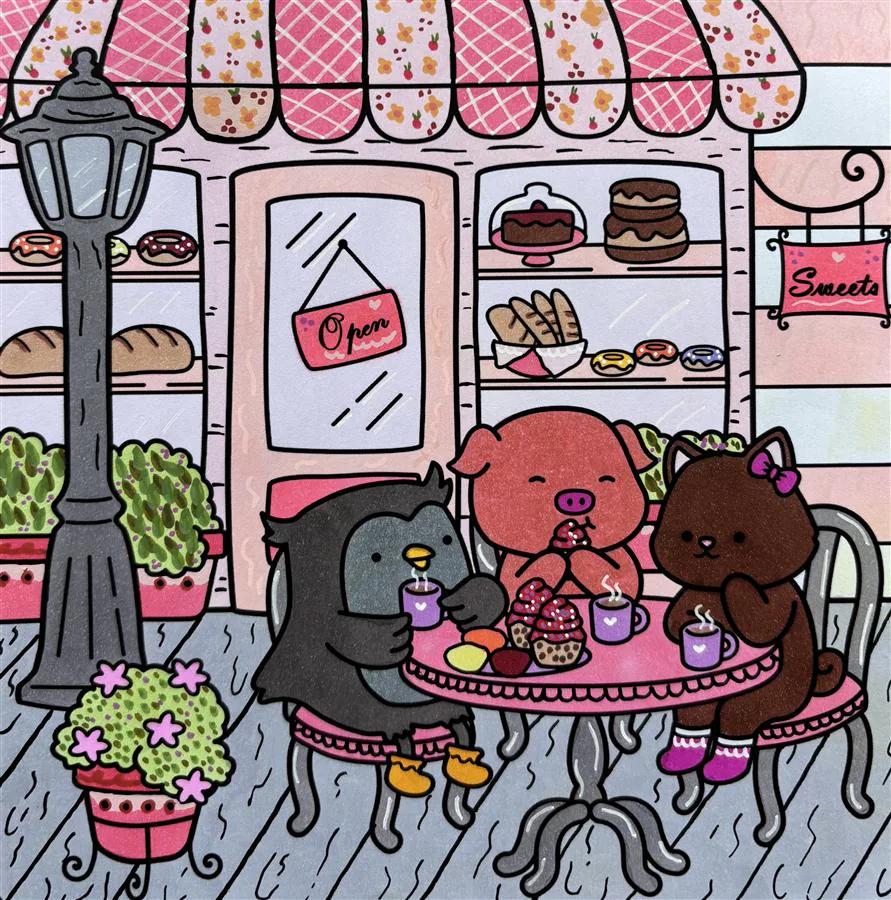
10 easy things to color when you feel stuck
| Subject | Four-color start | First area |
|---|---|---|
| A mug and steam | Cream, caramel, dusty pink, brown | Fill the mug with the lightest color. |
| A rainy window | Muted blue, warm grey, honey, brown | Color the frame before the rain. |
| A round animal | Beige, warm brown, sage, honey | Lay down one light body color. |
| A simple flower group | Sage, soft yellow, pink, cream | Repeat one petal color. |
| A stack of books | Muted blue, brick red, cream, brown | Choose one color for the largest book. |
| A bubble bath | Powder blue, lavender, pink, grey | Keep most bubbles pale. |
| Autumn leaves | Caramel, muted orange, olive, cream | Color three leaves with the same two shades. |
| Mushrooms | Rust, cream, sage, dark brown | Start with the caps, then repeat the color. |
| A small baking scene | Honey, cream, dusty pink, cocoa | Begin with the bowl or one pastry. |
| One object on a busy page | Any four colors you already like | Finish only that object today. |
Match the page to the time you have
| Time available | Choose | A useful stopping point |
|---|---|---|
| 10 minutes | One mug, flower, leaf or book | Finish one object with a light and dark shade. |
| 20 minutes | A small animal or one corner of a room | Complete the main subject and two nearby details. |
| 40 minutes | A simple full scene | Place the main colors and leave highlights for later. |
These are planning suggestions, not deadlines. Stop at a clear point and keep the chosen colors together if you want to continue later.
Try a four-color rescue palette
If the subject is easy but the colors are not, choose one of these short combinations:
- Warm home: cream, caramel, dusty pink and cocoa brown.
- Rainy window: muted blue, warm grey, honey yellow and dark brown.
- Pastel bath: powder blue, lavender, pale pink and soft grey.
- Small garden: sage, cream, soft yellow and mauve.
Use the lightest shade on large areas and save the darkest one for small shadows. The cozy coloring palettes guide has more combinations if none of these matches your page.
A simple 20-minute coloring method
- Choose one page and close the other books.
- Prepare four colors plus a scrap area for testing them.
- Start with the largest easy shape, using the lightest color.
- Repeat the same colors on two or three smaller details.
- Stop after the main subject or add one darker shade if you want more depth.
If you use alcohol markers, place a protection sheet behind the page before starting. The guide to cozy coloring basics covers this setup in more detail.
What if every page still feels too complicated?
Choose one object inside a detailed page and treat it as today's complete task. Color the chair but not the room, the animal but not the garden, or the mug but not the whole table.
You can also switch to a book with larger shapes and fewer unrelated objects. Compare page style and difficulty in the guide to beginner-friendly cozy coloring books.
Key takeaways
- Choose an obvious first move instead of a perfect full-page plan.
- A familiar subject and four to six colors are enough to begin.
- Finishing one object can be a complete coloring session.
FAQ
What should I color when I have no ideas?
Choose one small, familiar subject such as a mug, flower, book, window, mushroom or cute animal. Use four colors and begin with the easiest area instead of searching for the perfect page.
How do I choose a coloring page quickly?
Look for a page with one clear subject, a simple area you can start immediately and shapes that fit a short palette. If two of those three points are true, the page is a practical choice.
How many colors should I start with?
Four to six colors are enough for most simple cozy scenes. You can add one darker shade or white highlight later if the page needs more contrast.
Do I need to finish the whole coloring page?
No. Finishing one object or one section can be a complete short session. You can return to the rest later with the same palette.
What is the easiest thing for a beginner to color?
Large, readable shapes such as a mug, simple flowers, books, leaves or a round animal are easier than pages filled with tiny unrelated objects.