
Finishing details
Acrylic markers for coloring details and white highlights
Acrylic markers are most useful at the end of a coloring page. A fine opaque line can add shine, steam or tiny patterns without changing the whole palette.
Quick answer
Choose a fine acrylic marker, test it on scrap paper and use it only after the base color is dry. White is the easiest color to reuse for eye shine, mug reflections, bubbles, stars and small dots.
Keep the marks tiny. Three deliberate highlights usually look cleaner than covering a large area with opaque paint.
What acrylic markers add to a coloring page
| Detail | Useful color | Simple placement |
|---|---|---|
| Shine | White or cream | Top edge of a mug, eye, berry or window. |
| Steam | White | One or two thin curves above a warm drink. |
| Pattern | Pale pink or sage | Small dots on fabric, notebooks or wallpaper. |
| Warm light | Soft yellow | Tiny stars, lamps or window accents. |
Use them as a finishing tool, not a base marker
Acrylic paint sits more opaquely on the surface than alcohol marker ink. That makes it useful for details, but less comfortable for large smooth areas. Build the main color with pencils or markers first, then add a few opaque accents.
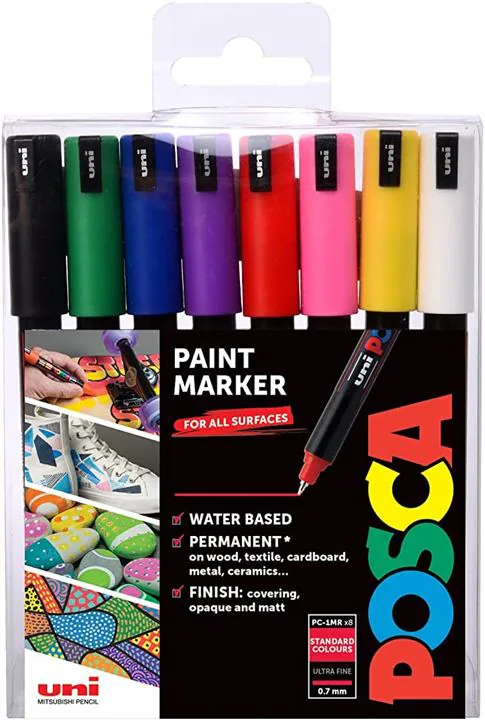
What tip size works for small details?
A tip around 0.7 mm is a practical starting point for highlights and dots. A larger tip can work for bold shapes, but it is easier to add too much paint. Whatever the size, prime the marker away from the coloring page.
Two Tooli-Art sets opened on video
Two Tooli-Art sets with an extra fine 0.7 mm tip, opened and tested: the Wildflower set (28 colors, a floral range with plenty of pinks, purples and light greens) and the Earth Tones set (36 colors, skin tones, browns, terracotta and grays). The second one is the more useful for cozy coloring: those are exactly the shades missing from a standard alcohol marker set.
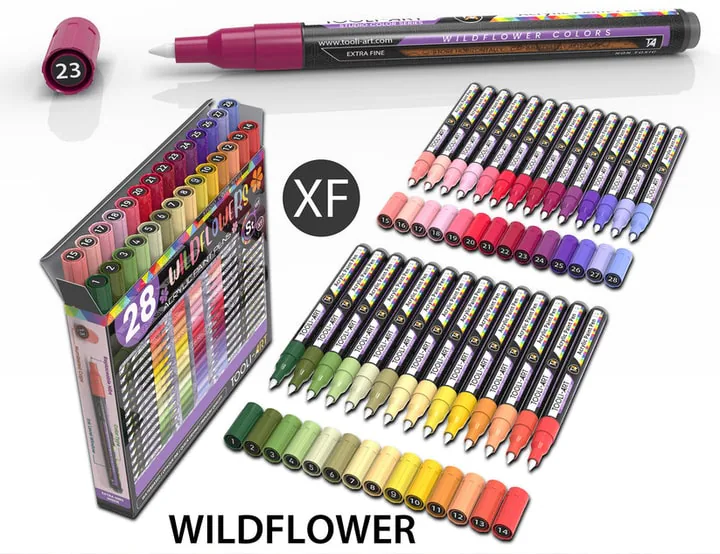
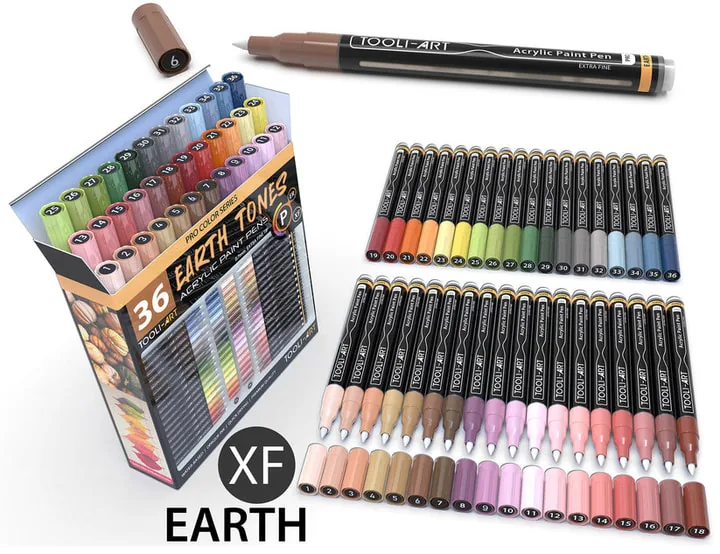
Like all acrylics, they go on top of an area that is already colored and dry. Shake well before the first stroke, prime the tip on scrap paper until the paint comes through, then work in small touches. On a cozy page they are mostly for white highlights, small dots and corrections.
A simple four-step method
- Finish the main colors and shadows.
- Let the page dry fully, especially after alcohol markers.
- Shake and prime the acrylic marker on scrap paper.
- Add one small highlight, pause and decide whether the page needs more.
If the paint skips, avoid pressing harder directly on the page. Re-prime it on scrap paper first.
White first, then a few soft colors
White is the most flexible choice. If you enjoy colored details, cream, pale pink, sage green and soft yellow can fit cozy palettes. Start with one extra color instead of buying a large set before you know how often you use it.
Mistakes to avoid
- Priming the marker directly on the finished page.
- Adding details before the base color is dry.
- Covering a large area when a tiny highlight would be enough.
- Going over the same wet line repeatedly.
- Closing the coloring book before the paint has dried.
Key takeaways
- Fine acrylic markers work best for final details.
- White is the most useful first color.
- Test the flow away from the page and let every layer dry.
- Use fewer marks than you think you need.
FAQ
What are acrylic markers used for in coloring?
Fine acrylic markers can add opaque highlights, dots, steam, stars and tiny corrections after the main coloring is dry.
What tip size is best for coloring details?
A fine tip around 0.7 mm is useful for small highlights and dots. Test the flow on scrap paper before touching the page.
Can acrylic markers go over alcohol markers?
They can work over dry alcohol marker areas, but results depend on the paper and paint flow. Let the base dry and test first.
Which acrylic marker colors are most useful?
White is the most versatile. Cream, pale pink, sage and soft yellow can add small accents without taking over the page.